August 23, 2010

My troubles with wax

Greetings once again readers. Forgive me for the long period since the last post, I have been busy building our new deck after my weeks of backyard preparation.

The weather for the past few weeks has been pretty lousy and the forecast for the upcoming weeks isn't looking to great either. It seems that fall is finally upon us, barring any freak heat waves. I did do a quick check-in on the bees last week to see how they were managing. I'm happy to say they've started working on filling the 3rd box with honey but I don't think there will be enough nectar to finish the job. There aren't any major flowering crops at this time so they'll only be foraging on what little blooming plants they can find. I'll have to start feeding them so they can build up enough stores for winter. The forecast is looking good for tomorrow so I'll be heading out to do a full inspection to make sure they are free of disease and pests. The last thing you need is a hive weakened by those issues going into winter.

Today I decided to try and get my two buckets of burr comb refined down into some liquid gold. I'm not sure how much I'll get, but I need to free my buckets up so I can use them to collect more burr comb in the future. Having talked to my instructor from the beekeeping course on various ways in how to go about melting the wax, I started off by getting all the comb into my pot in a double boiler setup.


This appeared to be going well, but there wasn't enough heat to completely melt all the wax, it was hardening up on the last piece of comb I put in the pot forming a wax ice burg. All other sources I've read said you need to get a water and wax mixture boiling so I threw out the double boiler idea and put the pot directly on the stove and added some of the boiling water.


As soon as it began boiling I realized that I had an issue. I don't have any other metal vessels into which I can strain the large debris out of the wax, oh sure, I could have used one of our nice cooking pots but not if I wanted to sleep in a cozy bed tonight.

I've decided I'll just put the mixture out in my garage for the night to see how well it separates and hardens on it's own. I may have to melt it down again to strain it but I don't have any plans on using it for candles or beauty products so if it's not 100% clean it's not a big deal. I'll post a picture tomorrow of how well the separation went. In the mean time I'm off to the Good Will store to see if I can get some cheap metal vessels.

August 11, 2010

Everyone Needs Their Own Space

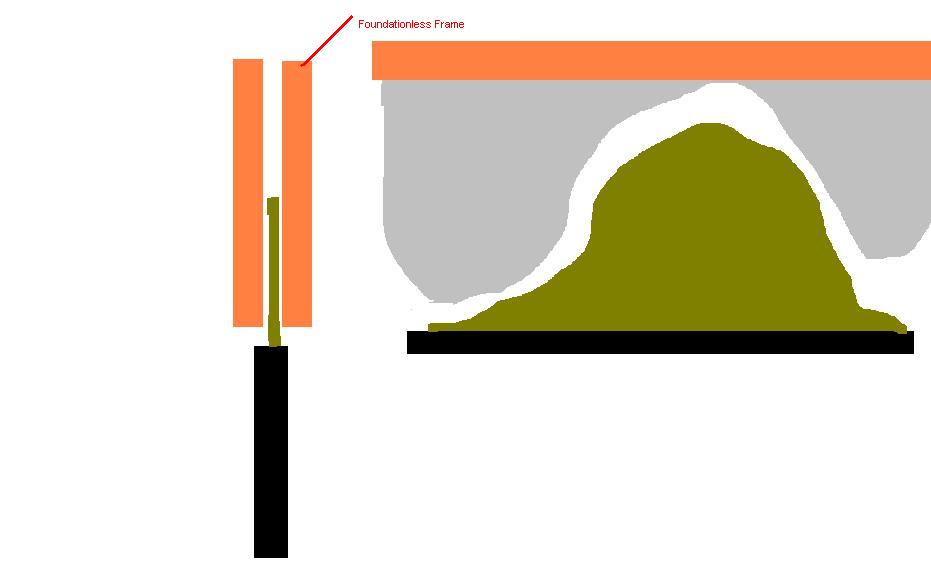
So there was a very cool observation during my last inspection and a great learning experience. As I was inspecting the middle box I noticed that a foundationless frame I had pulled out was not completely drawn out. It looked a little something like this, forgive me for my lack of MS Paint skills.

My first thought was that it was normal, the bees just hadn't gotten around to drawing the comb all the way down to fill out the entire frame. However, while I was sliding it back into the box I noticed a very large piece of burr comb on the frame behind. It appeared to be drawn onto the outer frame and I was frustrated because I thought I had fixed this problem by adding a 10th frame. Upon closer inspection thought it was actually drawn upwards from the top of the frame below, and the outer frame was just fine. After some cursing I realized I would have to remove the middle box in order to cut this comb out. It was either that or somehow reach my hand down in between frames. I wasn't planning on getting that far down into the hive, but it had to be done. So why did they create this comb?

I am quickly learning about the importance of "bee space". This is what Lorenzo Langstroth discovered in 1852, the space in which two bees can move past each other back to back, 1cm. This is the space between two drawn frames of comb, any more space results in burr comb as the bees try to ensure this bee space. The problem of foundationless frames is that they don't really offer any sort of guide for the bees leaving them to their own devices, resulting in some very unexpected architecture. Because I had failed to properly line up the frames from box to box, the bees fixed the bee space on their own. There are actually frame spacers you can buy that will ensure the frames between boxes line up vertically and I am starting to wonder if I should have invested in some of these.

As you can see, the foundationless frame allowed open space for the bees to build comb both up from the frame below and down from the paint stick guide on the upper frame. Because these didn't actually line up at the point in which they would have joined it caused both to stop. The top frame looks incomplete because the large shark fin shape comb filled the rest of the space below.

All in all a new lesson learned and something to keep in mind when I add new boxes, maybe I will even purchase a few frame spacers to add next season.

August 9, 2010

Busy as a...well, you know

Man have I been a busy boy for the past week or so. I've been trying to get our backyard ready for some deck construction this upcoming weekend so I haven't had much free time to blog.

A few days ago I headed out to the hive to do a quick inspection to see if the frame feeder was empty and to check on the progress of the 3rd super I added. The feeder was bone dry so I removed it, however the bees hadn't made any progress on drawing comb on any of the frames. Being that I wasn't doing a real inspection I figured I'd save deeper analysis for later.

Today was a gorgeous day, hot and sunny without a trace of wind. I packed up all my gear and headed out to see how the bees were doing. Activity around the hive was looking good, I always take time each visit to watch the bees behaviour coming and going from the hive. A lot of beekeepers will tell you that you can always tell if there are any issues in the hive by what is going on at the front entrance. My girls looked just fine, in fact they're working hard to keep the house cool. Bees regulate the temperature in the hive all by themselves. If it's too cold they will huddle together and vibrate their flight muscles to generate heat and if it's too hot they will use their wings to force air through the hive. Here you can see the bees lined up in a row fanning their little wings to keep the air flowing, it was the same up at the top entrance with the exception that the bees were facing the other way. Blow air in one entrance, suck it out the other. Smart creatures indeed.


Fanning air out of the bottom entrance.


Fanning air into the top entrance.

The bees had started drawing comb on the new frames, there were even a flew places where the honey was capped. Once the bees have gathered enough nectar they will use their wings to fan the nectar so that it loses moisture and when it finally reaches the proper viscosity they will cover the cell with wax. When I moved into the box below I was extremely happy to see that the outer most frame was completely capped with honey, there was a small patch of pollen at the bottom but mostly honey. Bees always build their nests in a ball shaped pattern, the core of the ball is where they raise brood and as you move towards the edge they store pollen and then finally honey. The outer most frames are usually solid honey. This layer of honey also serves as insulation in order to keep the brood nest at the correct temperature to raise young.


Outer frame fully honey, and a small bit of pollen at the bottom.

As I moved towards the center of the box I found solid capped brood that was topped by capped honey. In the picture below you can get a sense of how the ball shape forms. The top of the frame is covered in capped honey, and as you move down you see the different shades of yellow pollen, finally the capped brood goes to the very bottom. If you imagine this as the upper cross section, the capped brood would continue on the frame below in the lowest box. The laying pattern of this queen isn't stellar as there are a few missed cells with no capped brood. Overall not a great concern because a higher percentage of the cells did have eggs laid in them.


A visual cross section of the "brood ball".

I was very tempted to take one of the outer frames of honey to come home with, but I decided against it. The bees are doing a fine job and I imagine they will probably be able to fill up the top box with honey by the end of August. I was speaking with Mario and his neighbour to the south has an Alfalfa field. Alfalfa has two blooming periods because it grows so well and gets cut down after the first bloom. Turns out the second bloom will be starting within the week. With any luck my bees will be working their little hearts out to gather some stores for winter and maybe, just maybe, some excess I can keep for myself. I really don't want to steal everything because I think it's best for bees to eat honey over winter as apposed to sugar water feed. As I read on the bee forums, "Until you have a colony of bees survive it's first winter you are a bee haver, not a beekeeper." Here's hoping.

August 3, 2010

The Lazy Man's Hobby

Beekeeping has often been quoted as "The Lazy Man's Hobby" and it's really quite true. If you only have a few hives and you take a minimalistic/organic approach there really isn't a whole lot for you to do. You simply check the hive every 10 days or so to make sure the bees aren't having any issues with disease or space constraints. There is much more work to be done during fall and spring than winter and summer, but most of the time you are just leaving the bees alone. This leaves a lot of downtime that needs to be filled.

I've spend my time reading the bee source forums, a great resource to all things beekeeping. Any question you may have will quickly be answered by beekeepers all over the country and there are countless threads in which you can just read to learn more about bees. I've added the link on my side bar if you wanted to check it out!

I've also been thinking about what I can do to promote urban beekeeping here in Edmonton. I haven't really heard much from the city developers my counsellor got me in touch with other than "we're looking into it." While my original train of thought was to try to get beekeeping legalized, which will eventually happen judging from other cities around the world, I have thought of a great plan to get bees into the city that avoids the NIMBY (Not In My Back Yard). I would call it "Buzzing With Business" and it would be a program that would allow local business with accessible flat rooftops to have a hive. My main issue is that I would still need to get the city on board to provide permissions because quite frankly it would be hard to get businesses on board if it was illegal for them. If enough business signed up it would allow for training of people who wanted to learn about beekeeping as I wouldn't be able to manage all the hives. The best part is the hives would be out of site and out of site = out of mind. After a couple of years pass without incident it would provide valuable evidence to the city for legalizing beekeeping.

As for my other projects I'm still really keen on getting some Newbee TV episodes filmed and edited. I would love some input from my readers though! I need episode ideas and as it will be focused towards new beekeepers/people who want to become beekeepers, what sort of things would you like me to cover? Post below in the comments!

I will be heading out to the hive tomorrow if the weather is nice, I'll post up with some pictures so everyone can know how my bees are doing!

July 27, 2010

Summer Lovin'

Wow! What great weather we have been having for the past week or so. Granted there was some pretty hefty rain that came and went, but as of late it's been sunny or sunny with cloudy periods. I can honesty say I was a bit worried because I feed my bees with the notion that it would be lousy out, not sunny, so I didn't know what to expect when on this inspection. Would they have ignored my feed with such great weather allowing for nectar collection?

I'm a little ahead of my proposed inspection schedule, but with today being such a glorious day with the hot sun and lack of wind I just had to go out. With all this great bee weather I decided to pack up an extra super along with 10 Mann Lake frames just in case the bees happened to doing extremely well. When I arrived at the hive things were definitely looking good, my hopes and expectations immediately rose as this is what I saw.


The entrance was busier than I have ever seen it before. Lots of bees guarding the entrance and even more coming and going. I quickly suited up and got my smoker going. I was going to try working without a veil today, but I'm still a bit nervous about that prospect and I think my nerves were strained when I saw all the activity at the front. I did work again without gloves though, that sting last week hasn't deterred me and my finger is back to normal size. Most people are very concerned with the swelling of a bee sting even though it is the bodies normal reaction to the foreign proteins. Everyone is technically allergic, however a small population is extremely allergic where the reaction spreads beyond the local area. Given a few days the swelling will go down and all is well.

I popped the top off and was happy to see the bees were "all up on" my frame feeder, I guess they had no issues with the help I was offering. The feeder was only about half empty so judging from what I have read on some bee forums they aren't using it at a crazy rate, I was expecting it to be empty after a week.


I removed the feeder and instantly had a problem...I didn't have anywhere to put it. I couldn't prop it up against the hive like I do with my other frames because the syrup would run all over the place. I reluctantly placed it on the ground and in the process squished a whole lot of bees. Not to sound like a bleeding heart because a lot of bees do die during an inspection, however I can't help but feel guilty for the ones that I could have prevented with better planning. Feel free to avert your eyes from the carnage below.


(I apologize for the lack of focus, but those fuzzy blobs are dead bees)

After a quick prayer for the deceased I started inspecting the frames on the top super. Every single one of them was drawn out! It's incredible, my bees are doing fantastic. A closer look using the sun behind my back showed hundreds, more like thousands, of eggs in the newly drawn comb on multiple frames, this is going to be one strong hive once they all hatch into bees in about 3 weeks. I am delighted that I decided to bring my 3rd deep super because this hive was ready for it. I scraped some of the burr comb off the top of the frames to make room for the lid and to my delight some of that burr comb happened to be capped honey, I set that aside for later. I added my 3rd super and voila! Inspection done. Isn't it a wonderful sight!


Oh, as for that burr honey I collected, I ate it when I got home(wax and all). So delicious! Literally, to get any fresher the bees would have to deposit the nectar in your mouth, fan it and cap it. I am really hoping my hive is strong enough to produce enough honey stores for winter so that I can take just a bit for myself.

July 20, 2010

Feeding the Bees

I apologize for any crazy typos during this post. I was working gloveless today and happened to make the mistake of pinning a bee against the frame, now my right pointer finger is about twice it's normal size. I was in the process of trying to flip a frame around so my wife could take a picture of some odd looking comb. The worse part was that I was holding the frame and didn't have enough hands to remove the stinger meaning more and more venom was still being pumped in. I put the frame back in and used my hive tool to scrape it off, but enough about my stupidity, on with the post.

Lately I've been a bit concerned with how my bees are progressing. They appear to be building their numbers sufficiently, but they aren't really drawing out new comb. The 4 middle frames in each super are fully drawn out with nice brood patterns, but keep in mind 5 of those came with the nuc already drawn out. However, the other frames they aren't really taking too. They have drawn some nice beautiful comb on a few of the foundationless frames, but this was after I moved them into the middle of the brood frames. I think that will be the key to getting all the frames drawn out will be to slowly start rotating empty frames into the middle of the brood chamber so they draw them out, I can't do this too quickly though because you don't want to separate the brood by more than 1 empty frame. Some beekeepers are using 8 frame boxes because they find the bees really don't like drawing comb on the outer frames of a 10 frame box, however it's too late for that because I've already purchased all 10 frame supers.

In an attempt to help the bees along I have decided to mix up some 1:1 inverted sugar solution to feed the bees. The last week or so has been really mixed weather, but mostly rain. When it's raining outside the bees won't fly, so they need to rely on stored nectar during that period. Adding my frame feeder of syrup will help them cope during raining days so they aren't using up all the stores they've been previously saving up. Feeding bees also helps them draw out comb faster because the extra resources allow them to focus on other things than just feeding brood.

I made up my batch of feed using 5 pints of water with 5 pounds of sugar. I brought the water to a boil and then slowly added the sugar. Once dissolved I brought the solution back to a boil, added 3 tablespoons of vinegar and then boiled it for 20 minutes before letting it cool. The boiling process and added vinegar help break down the sugar into fructose and glucose, the idea being that it's easier for the bees to digest. While bees naturally have an enzyme that breaks sugar into fructose and glucose, it's thought that this allows them to use more syrup in a shorter time. There are many differing opinions on feeding bees, and I decided to give this a try first. In future I may just dissolve sugar in hot tap water to save both time and energy. I will need to purchase a food scale though because trying to weigh out 5 pounds of sugar while holding a pot on our bathroom scale was too time consuming. I didn't really document this process, but I will need to make up another batch for when I go out for the next inspection. I'll make sure to take some pictures then.

Once I got the solution made up it was just a matter of transferring it into the frame feeder and installing it into the hive. Unfortunately our camera battery died during the hive manipulation so I only have pictures of me filling the frame. When I go out to check on the hive in 2 weeks I'll get some picture of what it looks like installed.

Filling the feeder frame with 1:1 Syrup.


The feeder frame is hollow. It takes a spot of a normal frame in a super. The white plastic mesh helps the bees get to the syrup without drowning.


My wife took this thinking the white corner was the weird comb, however this is what a good frame should look like. All the white area is capped honey and the middle of the frame is where the brood is raised.

July 19, 2010

Honey Bees

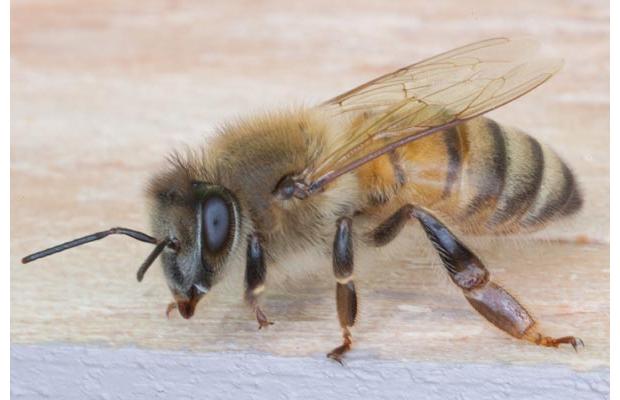
Most people aren't able to recognize a honey bee when they see one. They are wrongly associated with both bumblebees and wasps. Honey bees are much smaller and have a body more like that of a large fly. The reason why people aren't familiar with honey bees is because they are not scavengers like wasps so unless you are an avid gardener with lots of pollinator friendly flowers, you will not commonly see them around your patio.


Name: Honey Bee - Apis Mellifera
Size: 1.0 - 1.5cm
Colour: Pastel Yellow, Brown, Black
Nesting Sites: tree hollows, large man made hollows
Nesting Material: Wax Comb
Colony Size: 10,000-80,000
Food: Pollen, Nectar
Stinger: Barbed, can only sting once

Unlike wasps and bumblebees, a honey bee colony will survive through winter by forming a very tight cluster and vibrating for warmth. The population will gradually decline through winter, but when spring arrives and the weather improves the colony will immediately begin foraging and starting to raise brood. Once there is sufficient nectar and pollen available the queen will start laying more eggs, a productive queen can lay anywhere from 1200-2000 eggs a day. These eggs take around three weeks to become new nurse bees. Once a nurse bee hatches she immediately gets to work feeding young larva and eventually she will graduate into a guard bee protecting the hive entrance. She will then start taking orientation flights and will soon become a forager until she dies. Honey bees work very hard during their life and will only survive 6 weeks, they are literally worked to death. During the summer the colony will work hard to produce enough stores to survive the winter. Depending on the climate a colony will need anywhere from 30lbs to 60lbs of honey to survive, they use this honey as energy to generate heat by vibrating their flight muscles. A honey bee queen can survive many winters, living up to 5 years, but eventually she will start running out of sperm to fertilize eggs. Since all workers are female that hatch from fertilized eggs, they will sense the old queen is failing and start making a new queen. Unfertilized eggs hatch into male drones that do no hive work while draining hive resources and only exist to mate. While the life of a drone may seem glamorous, they die in the mating process and any drones left in the hive before winter will be forced from the hive by the workers to freeze/starve to death.

Honey bee colonies reproduce in what is known as a swarm. Most people hear swarm and they immediately think of an angry mass of attacking bees and this could be the furthest from the truth. There are many reasons that hive can swarm, but the most common is that the hive population has grown to large for the space it is in. The bees will recognize this and start making a new queen. When she hatches she will take over the duties of the old queen who will leave with a large portion of the bees to find a new nest location. While at first glance a swarm can be unnerving with thousands of bees flying around and forming a large hanging cluster, they are actually very docile. Because honey bees die when they sting they are very reluctant to do so. They will only ever sting to defend their brood or if their own person life is in danger. Since a swarm has no hive to defend they are not in the mind set to sting, also because they have stuffed their bellies full of honey for the journey it makes it very difficult for them to physically bend their bodies to sting.

There are many species of honey bees with different positive and negative beekeeping traits. They all slightly differ in colour and the most common are seen below:

Carniolan, Apis Mellifera Carnica


Italian, Apis Mellifera Ligustica


Caucasian, Apis Mellifera Caucasa


German Black, Apis Mellifera Mellifera


Maybe the most infamous of honey bee species is Apis Mellifera Scutellata or as the media have dubbed it the "Killer honey bee". The africanized honey bee does not differ in any way from the regular European honey bee, but it does defend it's hive in a more vigorous manner. They are very territorial and will chase any intruders to their territorial boundary. While being labelled as killers these bees are still manageable and are kept by beekeepers in southern climates. Originating from a warmer climate in South America, africanized bees have migrated as far north as Southern California but cannot survive the cooler winters of northern states.